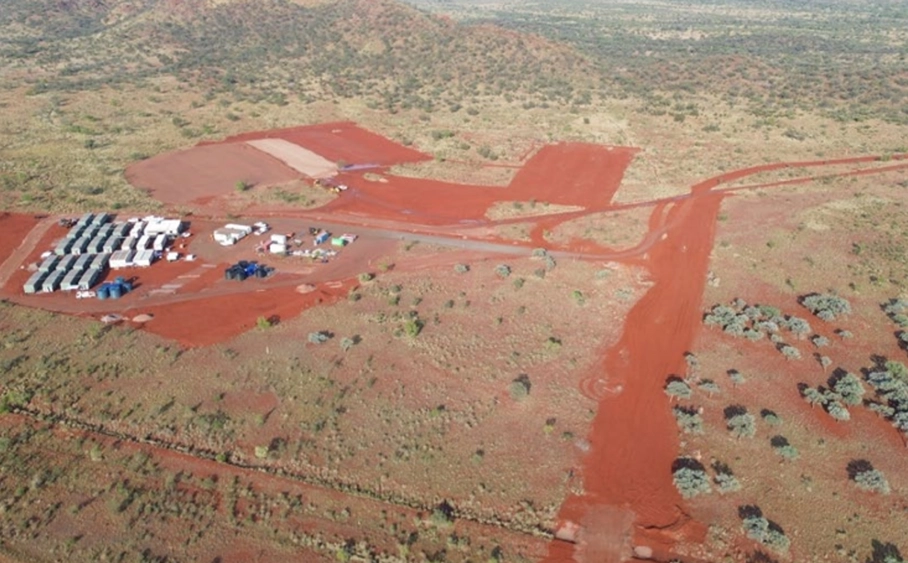
Australian mining company KGL Resources has approved the final investment decision for its Jervois Copper Project in the Northern Territory, advancing a major mineral development backed by approximately A$689 million in aggregate funding.
Announced on 15 October 2026, the decision marks a significant milestone for the project, which is expected to generate up to 350 jobs during construction and support up to 550 ongoing positions once operational.
Located in Central Australia, the project is targeting its first copper concentrate production in the first half of 2028, with average annual production of approximately 30,000 tonnes of contained copper over an initial 10-year mine life.
The development highlights Australia’s continuing investment in mineral production and its capacity to support industries dependent on reliable supplies of copper.
For international businesses and investors, including those involved in Australia’s economic relationship with Saudi Arabia, the project also demonstrates how technical capability, structured financing and project execution can translate mineral resources into industrial development.
Key Takeaways
- KGL Resources approved the final investment decision for its Jervois Copper Project on 15 October 2026.
- The project is supported by approximately A689millioninaggregatefunding,includingaA300 million equity raising and an agreement with Wheaton Precious Metals.
- Up to 350 construction jobs and 550 ongoing operational jobs are expected to be created.
- First copper concentrate production is targeted for the first half of 2028.
- Average annual production is expected to reach approximately 30,000 tonnes of contained copper in saleable concentrate.
- The development will support regional contractors and suppliers while highlighting Australia’s expertise in mining engineering, infrastructure and mineral processing..
A Major Investment Milestone for Central Australia
KGL Resources’ decision to proceed with Jervois represents the transition from project preparation towards full construction and eventual commercial operations.
The company has completed extensive technical and economic assessments to support development of the copper, silver and gold deposits at the site.
According to its October announcement, approximately 60% of the project’s total capital costs are covered by executed contracts, providing greater certainty over important components of construction and delivery.
The processing plant’s engineering, procurement and construction contract has been awarded to Sedgman, while procurement of essential equipment is progressing.
Preparatory activities, including civil works and drilling, have already commenced.
Principal construction is expected to begin in early 2027, followed by commissioning and the planned commencement of copper concentrate production in 2028.
The final investment decision is particularly important because it represents formal board approval to proceed with a substantial capital-intensive development.
It demonstrates that the project has progressed beyond exploration and feasibility studies to a stage where financing, engineering, construction planning and operational requirements are sufficiently developed to support execution.
A$689 Million Funding Package Supports Development
The project’s financing structure is a central part of its investment story.
KGL Resources has established approximately A$689 million in aggregate funding through a combination of equity capital, existing cash and a precious metals purchase agreement with Wheaton Precious Metals International.
The funding arrangements include a completed A300millionequityraisingandaUS300 million agreement with Wheaton relating to future gold and silver by-products.
Under the Wheaton arrangement, financing is provided through staged payments and related facilities, subject to agreed terms and conditions.
Importantly, the financing does not require conventional project debt, and KGL retains its copper production without an associated copper offtake commitment under the Wheaton agreement.
The broader funding package also provides approximately A70millioninliquiditycapacityandallocatesaroundA20 million to exploration activities intended to identify additional mineral resources and potential opportunities to extend the mine’s operating life.
These arrangements demonstrate the importance of combining appropriate capital structures with long-term resource development planning.
For mining investors, the project’s financing model offers an example of how equity capital and future precious metals revenue arrangements can be used to support the development of a substantial copper operation.
Creating Employment and Regional Business Opportunities
The Jervois development is expected to make a meaningful contribution to economic activity in Central Australia.
According to the Northern Territory Government, the project could create up to 350 jobs during construction and support up to 550 ongoing jobs once operational.
The employment opportunities will span a range of activities, including mining, engineering, maintenance, logistics, processing and site operations.
Importantly, economic benefits are already extending to local contractors and service providers.
KGL has awarded a contract worth approximately A$36 million to Northern Transportables for a 180-person accommodation village and associated infrastructure.
The company has also engaged specialist contractors for engineering and processing plant development, demonstrating the breadth of services required to bring a mine into production.
These activities create opportunities beyond direct mining employment, including equipment supply, transport services, workforce accommodation, construction and ongoing technical support.
For regional economies, the development of a major mine can generate sustained demand for local businesses while creating opportunities for workforce development and specialised skills.
Building Australia's Copper Production Capacity
The Jervois Project is expected to produce an average of approximately 30,000 tonnes of contained copper annually in saleable concentrate over its initial 10-year mine life.
The operation will also recover silver and gold as valuable by-products.
Copper is an essential material for modern industrial development, with applications in electricity transmission networks, renewable energy infrastructure, transport, manufacturing and digital technologies.
As countries invest in power systems, infrastructure upgrades and industrial expansion, copper remains an important component of long-term resource planning.
The Jervois development provides an opportunity to increase Australia’s copper production capacity and strengthen its role in international mineral supply chains.
KGL is also undertaking additional exploration across the Jervois and Unca Creek tenements, with the aim of identifying resource extensions and potential new mineral deposits.
Although the current economic model is based on an initial 10-year operating period, successful exploration could provide options for additional future development.
Such extensions remain subject to geological results, project economics and further investment decisions.
Mining Expertise and Industrial Development
Jervois demonstrates that major mineral projects depend on a broader industrial ecosystem than extraction alone.
Developing a mine requires geological analysis, financing, engineering design, infrastructure development, equipment procurement, construction management, processing technology and ongoing operational support.
Australia has accumulated substantial expertise across these activities through decades of large-scale mining operations and international project development.
The Jervois Project brings together several of these capabilities, including specialist engineering, mineral processing and resource development financing.
Its progress also illustrates the contribution of established mining service providers to delivering complex projects in regional locations.
For international mining markets, these capabilities are often as important as access to mineral resources themselves.
Countries seeking to expand domestic mining industries must develop the technical, commercial and institutional capacity required to move projects from exploration into sustainable production.
What Jervois Means for Australia–Saudi Arabia Mining Cooperation
Saudi Arabia has identified mining as a strategic component of its Vision 2030 economic diversification agenda, with ambitions to expand mineral exploration, processing and related industrial activities.
Australia’s experience in developing resource projects provides potential areas of alignment with these objectives.
The progression of Jervois offers a practical example of the capabilities required to transform a mineral deposit into an operational mining business.
For Saudi companies and investors, relevant areas of Australian expertise include geological assessment, mine planning, engineering, processing technology, specialist equipment, workforce development and project financing.
Australian mining businesses considering opportunities in Saudi Arabia can also draw lessons from developments such as Jervois.
The key commercial opportunity is not limited to supplying equipment or participating in extraction. It includes supporting the full project lifecycle, from early technical assessment to construction, commissioning and long-term operational efficiency.
This perspective is particularly relevant as Saudi Arabia seeks to strengthen its domestic mining ecosystem and attract experienced international partners.
While the Jervois investment is an Australian development rather than a bilateral Australia–Saudi Arabia project, it illustrates practical strengths that could underpin future commercial engagement between the two countries.
A Positive Development for Australia's Resources Future
KGL Resources’ final investment decision represents a significant step towards bringing a new Australian copper operation into production.
With funding arrangements established, major contracts awarded and site activities underway, Jervois is progressing from development planning towards construction and commercial execution.
Its expected contribution includes new copper production capacity, regional employment, local business opportunities and demand for specialist mining services.
The project also highlights Australia’s broader competitiveness in resource development, supported by technical expertise, capital markets and experienced industry suppliers.
For Australia’s international economic partners, including Saudi Arabia, the development provides a relevant example of how mining investment can support industrial capability and long-term economic activity.
As both countries continue exploring opportunities in minerals and industrial development, experience in delivering complex resource projects remains a valuable foundation for future partnerships.