Key Takeaways
- Riyadh has launched the fourth phase of its Main and Ring Road Axes Development Programme.
- The initiative includes four strategic road projects spanning approximately 40 kilometres.
- The programme represents an investment of SAR 9.8 billion.
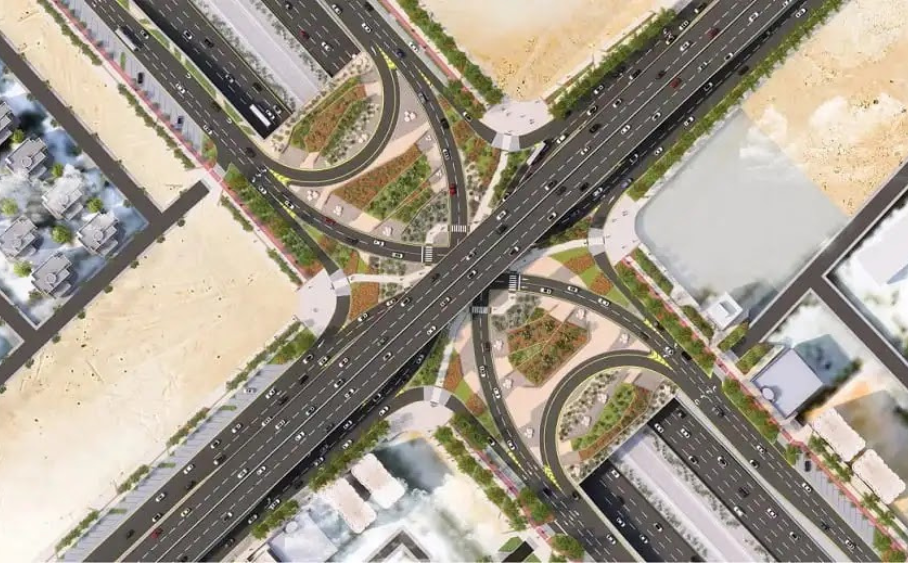
- Infrastructure works include 14 intersections, 33 bridges, six pedestrian bridges and five tunnels.
- Once completed, the network will accommodate up to 950,000 vehicles each day.
Riyadh Accelerates Infrastructure Development with Fourth Road Programme
The Royal Commission for Riyadh City (RCRC) has announced the launch of the fourth phase of Riyadh’s Main and Ring Road Axes Development Programme, reinforcing the Kingdom’s commitment to building a modern, integrated transport network.
The latest phase includes four major road projects covering approximately 40 kilometres, backed by an investment of SAR 9.8 billion. The programme is designed to improve traffic movement, strengthen road connectivity and support Riyadh’s continued urban expansion under Saudi Vision 2030.
As one of the fastest-growing capitals in the region, Riyadh continues to invest in large-scale infrastructure that enhances mobility, supports economic activity and prepares the city for future population growth.
Four Major Road Projects to Expand Riyadh's Transport Network
The fourth phase focuses on four key road corridors that will strengthen east-west and north-south connectivity across the city.
The projects include:
- Sheikh Jaber Road
- Prince Mishal bin Abdulaziz Road
- Prince Turki bin Abdulaziz I Road
- Najm Ad-Din Al-Ayyubi Road
Together, these developments will create a more connected road network while improving travel efficiency across several of Riyadh’s busiest corridors.
Sheikh Jaber Road
The Sheikh Jaber Road project extends approximately 12 kilometres, beginning at the intersection with Thumamah Road in northern Riyadh and continuing south to Khurais Road.
The new corridor will strengthen north-south connectivity while improving traffic flow between several key areas of the city.
Najm Ad-Din Al-Ayyubi Road
Stretching approximately 13 kilometres, this project begins at Jeddah Road and extends to Hamza bin Abdul Muttalib Street.
The development will provide improved accessibility across western and southern Riyadh while creating a more efficient travel route for commuters.
Prince Mishal bin Abdulaziz Road
The 6-kilometre Prince Mishal bin Abdulaziz Road project starts at Wadi Hanifa Bridge and extends west to the Western Ring Road.
Once completed, the route is expected to improve traffic circulation while strengthening links between several of Riyadh’s major road corridors.
Prince Turki bin Abdulaziz I Road
The Prince Turki bin Abdulaziz I Road project covers approximately 9 kilometres.
Beginning at Makkah Al-Mukarramah Road, the route passes through Al-Rafiah and Wadi Hanifa before continuing towards Al-Arijah, improving mobility between several important districts across the capital.
Major Infrastructure Upgrades to Support Future Mobility
Beyond road expansions, the programme includes significant supporting infrastructure to increase road capacity, improve safety, and reduce travel times.
The development will deliver:
- 14 major intersections
- 33 bridges
- Six pedestrian bridges
- Five tunnels
The upgraded road network will also include:
- 14 main traffic lanes
- Nine secondary lanes
Collectively, these improvements are expected to create a more efficient and integrated transport system capable of accommodating up to 950,000 vehicles every day, helping meet the demands of Riyadh’s growing population and expanding economy.

Supporting Riyadh's Vision for Sustainable Urban Growth
Transport infrastructure remains a fundamental component of Saudi Arabia’s Vision 2030 transformation strategy. As Riyadh continues to expand, efficient road networks play a vital role in supporting economic development, improving logistics, and enhancing connectivity across the city.
The fourth phase of the road development programme is expected to deliver several long-term benefits, including:
- Improving traffic flow across key transport corridors.
- Reducing congestion and travel times.
- Supporting future residential and commercial developments.
- Enhancing accessibility between business and industrial districts.
- Strengthening Riyadh’s long-term transport capacity.
The programme also complements wider investments in public transport, smart mobility solutions and urban planning, contributing to the development of a more connected and sustainable capital.
What This Means for Riyadh's Future Development
Riyadh’s continued investment in transport infrastructure reflects the Kingdom’s broader ambition to create globally competitive cities that support investment, innovation and economic diversification.
Large-scale projects such as the Main and Ring Road Axes Development Programme create opportunities across engineering, construction, transport technology and urban planning while improving the city’s overall competitiveness.
For Australian organisations with expertise in infrastructure development, intelligent transport systems, engineering consultancy and project management, Saudi Arabia’s expanding infrastructure pipeline continues to present opportunities for technical collaboration and knowledge exchange.
As Vision 2030 progresses, investments in modern transport infrastructure will remain central to strengthening Riyadh’s position as one of the Middle East’s leading business and investment destinations.